

.png)
Table of Content
First Impressions Happen Faster Than You Think
What Does Your Website Actually Say About You?
Appearance Matters, But It Is Only the Beginning
How Your Website Behaves, Builds or Breaks Trust?
Consistency Is What Makes People Feel Comfortable
What are the Red Flags That Make Users Leave Immediately?
What a Trustworthy Website Actually Feels Like?
What are Some of the Small Changes That Can Instantly Improve Trust?
Consider the impression you have of someone the first time you meet them. Even though you don’t consciously think about it, within a few seconds you have an impression based on how they present themselves, how well they communicate, their confidence level, and to a lesser extent whether or not you feel comfortable with them.
Similar to the way that we would judge someone we’ve recently met, each visitor that arrives on your site is judging their experience with your company. Their judgement isn’t just based on what design elements they see on your site, how the text is written, and so forth. Being a website design agency, we are focussed of precision, current UI/UX trends and updates that help us deliver great websites to our clients.
But here the main question is: If your website were a person would people feel confident enough in your website to continue the conversation?
When someone goes to your website, they don't analyze every single detail about your site. They often have an immediate reaction based on the overall feel of your site's design, colour scheme, layout, and how clearly you've communicated.
A well-designed website feels like meeting someone who is confident, clear, and well-presented. All the elements of your site make sense, and you feel an instinctive sense of comfort when exploring further.
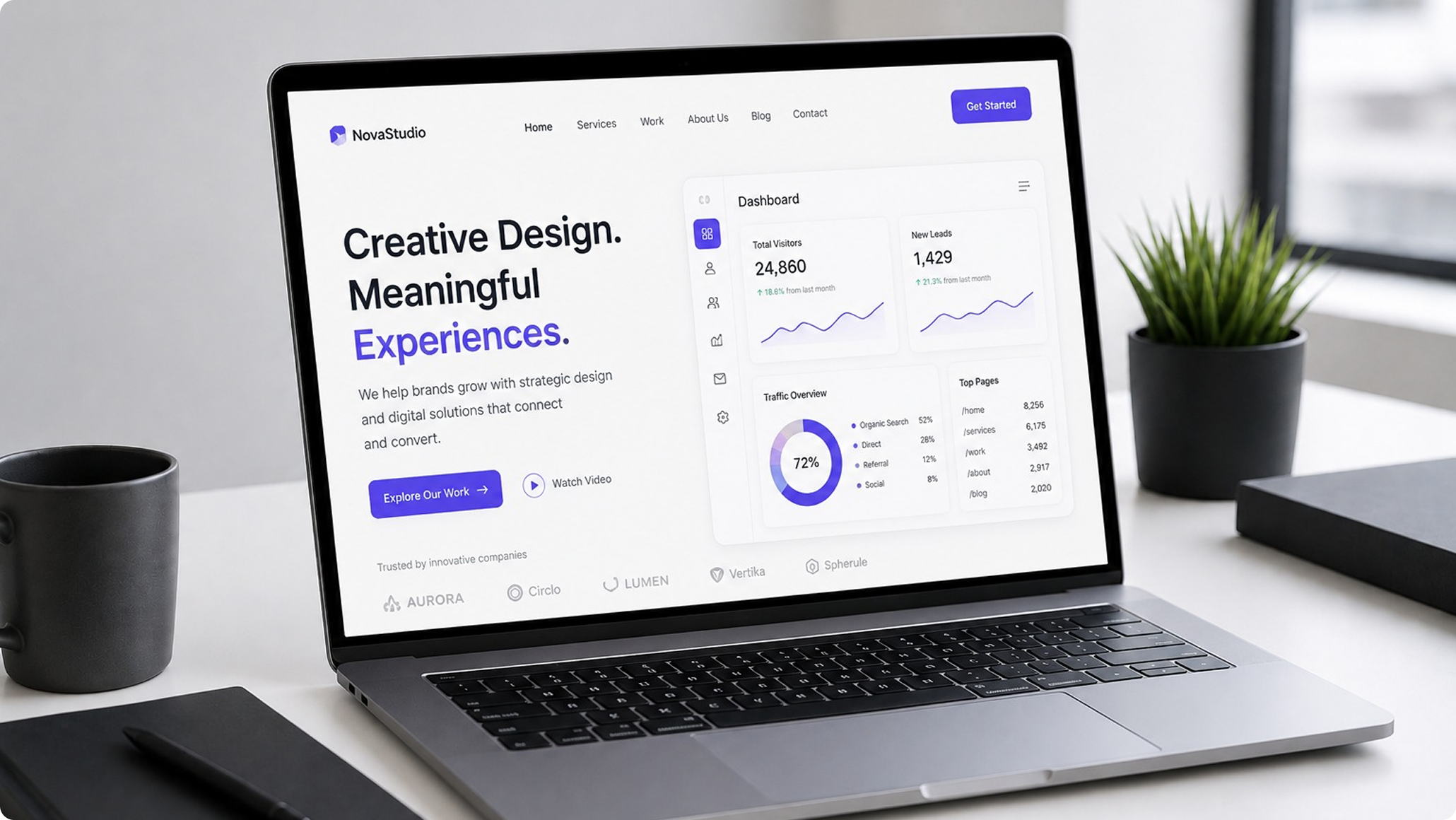
No matter what they are trying to do, every website has a message to convey in some way (and often unintentionally). The type of information you provide and how you present it has a huge impact on how your company identifies itself.
When a website has an apparent structure and a clean slate, it gives the impression that the person knows exactly what he/she is doing. With direct messaging and clear value, your site is likely to be a positive and seamless experience for your visitors.
On the other hand, a website that is over-documenting what it offers can make visitors confused. In this case, it feels like you're talking to someone who talks in circles with no clear message.
It is easy to assume that a visually attractive website is enough to build trust, but that is rarely the case. Good design can attract attention, but it cannot hold it on its own.
Think of it like meeting someone who is well dressed but difficult to talk to. The first impression may be positive, but the experience quickly becomes frustrating if communication is unclear or inconsistent.
The same applies to websites. Strong visuals should support usability, not replace it. A clean layout, balanced spacing, and thoughtful design choices create a sense of professionalism, but they must work alongside a clear structure and easy navigation.
Beyond how your website looks and sounds, the way it behaves plays a major role in how users perceive it.
Being a web development agency, we emphasize and prioritize how your website performs. A slow-loading page feels like waiting for someone who is always late. Broken links or missing information feel careless and unreliable. Confusing navigation feels like trying to follow a conversation that keeps changing direction.
On the other hand, a website that loads quickly, responds smoothly, and guides users naturally creates a sense of reliability. It feels like interacting with someone who respects your time and communicates clearly.
The structure of your message will depend upon how well you establish trust through your interactions with people. It takes time for people to build trust; it takes many interactions over time before a person will feel trusting of another's word or action.
On the other hand, if a visitor experiences each page of the website in a different design, with different tones and different ways of presenting information, there will be friction between the visitor and the website; it feels like having a conversation with a person who keeps changing their personality and it becomes very difficult to establish trust.

Here are some of the major red flags that make the users leave immediately:
1. Having an outdated design will make the company appear stagnant or not current with modern trends.
2. If you have too many pop-ups this could be seen to users as aggressive and overwhelming.
If the messaging is not clear, users will be left confused as to what they will receive.
3. A cluttered layout will make it harder to concentrate on what information is the most important.
4. Using poor spacing, inconsistent font or poor button visibility will give users pause before taking action because they are unsure.
5. Users may not be able to tell you what is wrong, but they usually know that something is not quite right and as a result will leave quickly.
A trustworthy website does not try too hard. It feels natural, clear, and easy to navigate.
Information is structured in a way that makes sense. The design supports the content instead of distracting from it. The user knows where to look, what to do next, and what to expect.
There is a sense of balance between visual appeal and functionality. Nothing feels forced, and nothing feels confusing.
Most importantly, the website feels aligned with the business it represents. It reflects confidence without being overwhelming and clarity without being overly simplified.
These changes may seem simple, but together they create a stronger and more trustworthy experience.
1. Improving trust does not always require a complete redesign. In many cases, small and thoughtful changes can make a noticeable difference.
2. Simplifying the layout can reduce confusion and help users focus on what matters. Improving readability by adjusting font sizes, spacing, and contrast can make content easier to consume. Optimizing performance can remove friction and create a smoother experience.
3. Strengthening your messaging by making it clearer and more direct can help users understand your value quickly. Even refining your call-to-action so it feels natural and relevant can guide users more effectively.
You can get used to looking at your own website. It's not unusual for you to get bogged down in its shortcomings as compared to the real experience of viewing it fresh each time you have a visitor to your site.
Taking a step back and evaluating the experience of a visitor to your website from that perspective can highlight areas on the site that you may not have noticed before.
Lastly, trust is built on more than just design alone; it is the cumulative experience of the visitor. When all things work together, your website can connect people to your business and lead to longer visits, exploration, and ultimately some form of action. At Ideafactor design, a website designing agency in Mumbai, we are focused on providing quality and website design services that caters good results, performs smoothly, and fulfills your business requirements efficiently.
Need to know more : Let’s connect reach out to our team via: Let’s collaborate, Reach out to us at: https://www.ideafactordesign.com/contact-us
or for further queries, contact us via: info@ideafactordesign.com
Do you have a website you would like to audit?


If you’re wondering how to create a strong online presence for your business, let’s connect! Schedule a call with us, and we’ll guide you step by step—right from scratch—on how to design your brand, build your website, and establish a powerful digital presence that truly represents you.